Propane Tank Capacity Guide (All Sizes) Gallons, Weight

It isn’t fun to run out of propane, whether grilling, camping, or running a generator. Determining the propane tank capacity is important to avoid a cold night in the RV, an unfinished brisket, or even having to close the food truck early.
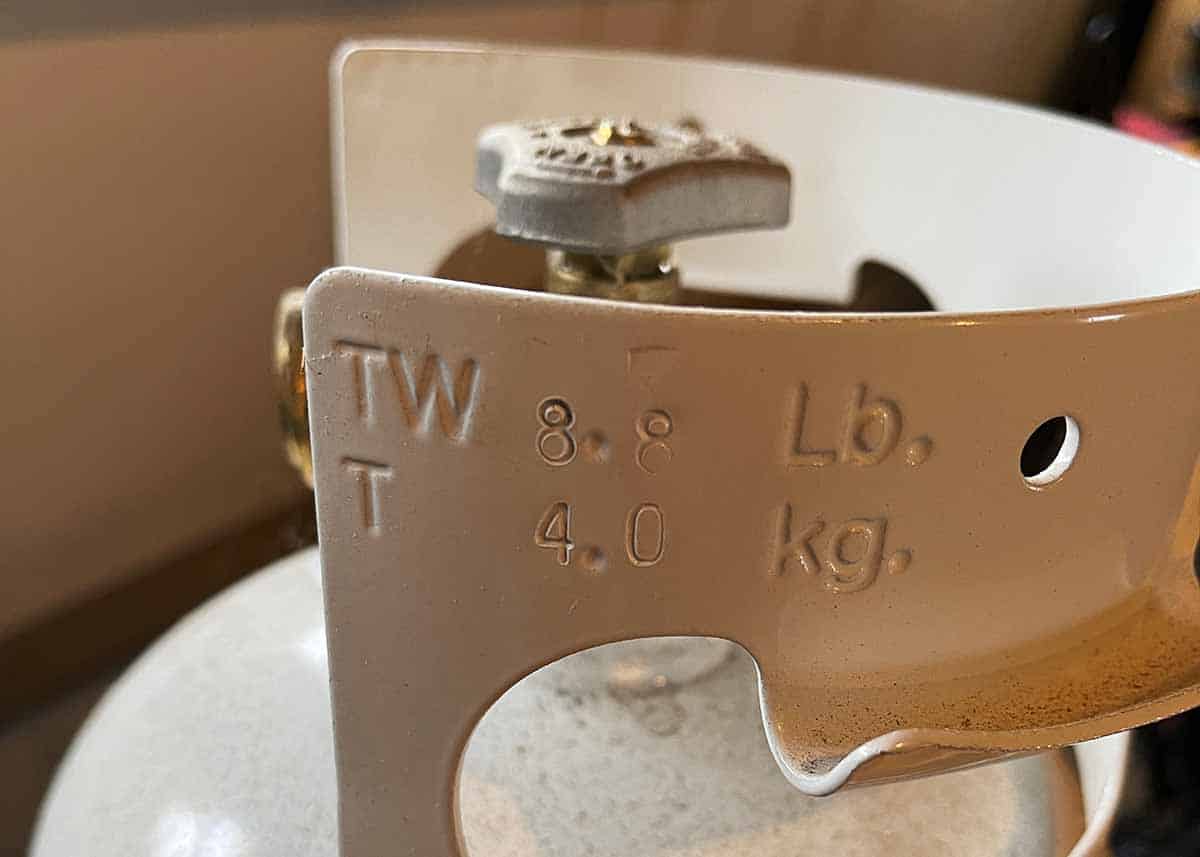
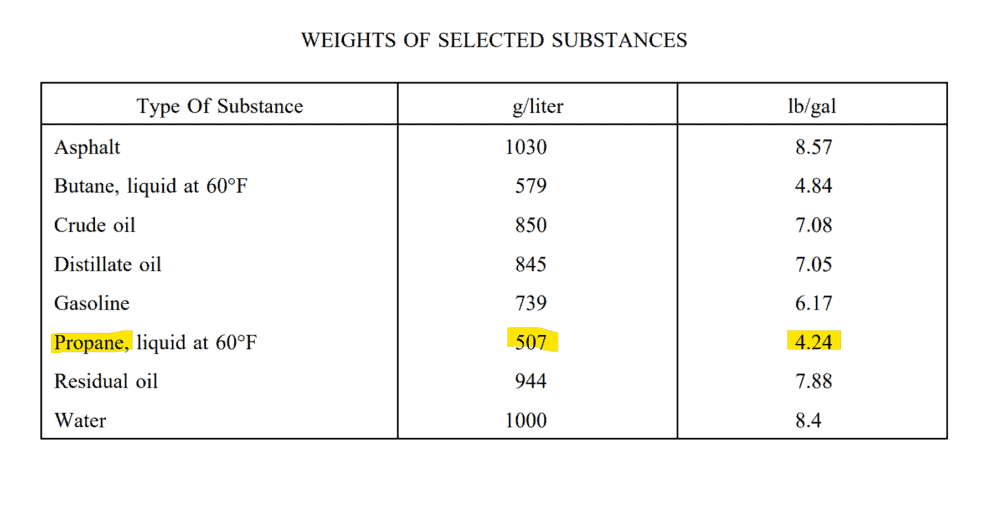
Every gallon of propane weighs 4.24 lb. And one pound of propane equals 0.236 gallons of volume. To determine how much propane is left, you can subtract the TW (tare weight) of your tank from the current weight. This will give you the weight of propane in the tank.
In this article, we’ll help you understand how to calculate the amount of propane in your tank. We’ll also compare the propane capacity of common tank sizes so you can decide which size is right for you.
Propane Measurements
Propane is measured in pounds, and one pound of propane equals 0.236 gallons. To calculate the number of gallons in your tank, multiply the number of pounds of propane by 0.236.
In the US, propane is also measured in gallons. One gallon of propane equals 4.24 pounds. To calculate the number of pounds in your tank, multiply the number of gallons of propane by 4.24.
How Many Gallons of Propane in a Tank?
Here’s the full volume breakdown (gallons and liters), plus the empty and full weight of 1, 5, 20, 30, and 40 lb tanks.
| Tank Size | Volume Capacity | Volume (Metric) | Full Weight | Empty Weight |
|---|---|---|---|---|
| 1 Pound Tank | 0.236 gallons | 908 mL | 2 lb | 1 lb |
| 5 Pound Tank | 1.18 gallons | 4.47 L | 13 lb | 8.8 lb |
| 20 Pound Tank | 4.7 gallons | 17.8 L | 37 lb | 17 lb |
| 30 Pound Tank | 7 gallons | 26.5 L | 53 lb | 22.7 lb |
| 40 Pound Tank | 9.4 gallons | 35.6 L | 72 lb | 29 lb |
Why Weights Vary: 3 Reasons
As you’ll notice in the chart, the empty weight plus propane doesn’t always match the full weight. This is for three reasons.
- Tank style: Some tanks are made differently and thus have different weights. To determine the exact weight of your tank, look for the TW stamp. This is the empty weight of your tank.
- Temperature: Propane volume changes with temperature. At 60 °F (15.6 °C), a gallon of propane weighs 4.2 lb. Propane expands 1.5% per 10 °F. As the temperature increases, a gallon of propane gets lighter.
- Expansion: Tanks aren’t filled to capacity. To allow room for expansion, tanks are intentionally underfilled, often to 80% capacity. But from experience, this can vary up or down around 10%.
Propane tanks only fill to 80% capacity; this is for safety reasons in case the propane expands in warm weather. It leaves room for the propane to expand if the temperature increases.
Converting Measurements
You can use an online conversion calculator to convert between pounds and gallons. The most common residential propane tank sizes are 20, 30, and 40 pounds.
Commercial propane tanks can be much larger but are uncommon for residential and RV use.
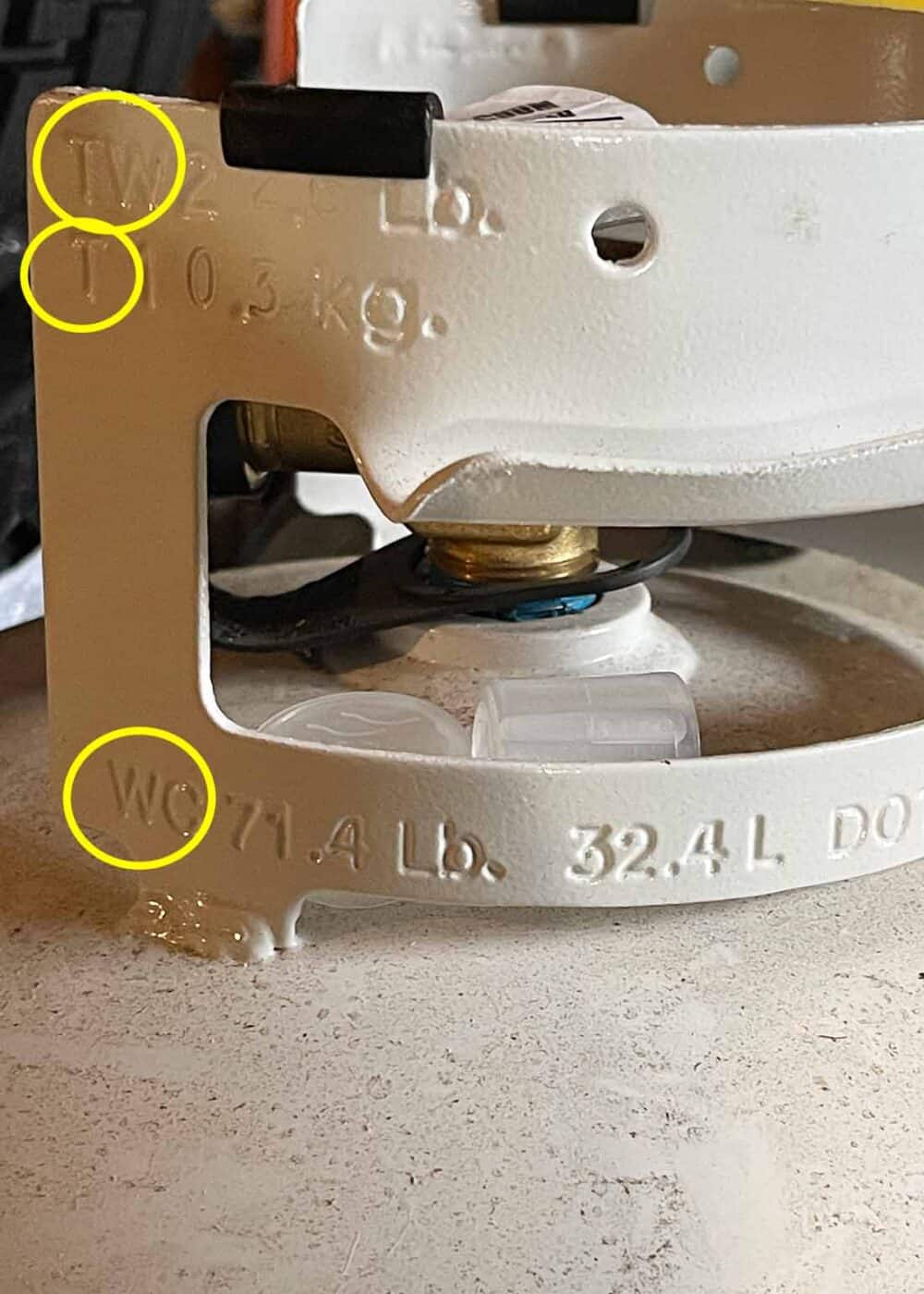
Propane Tank Markings
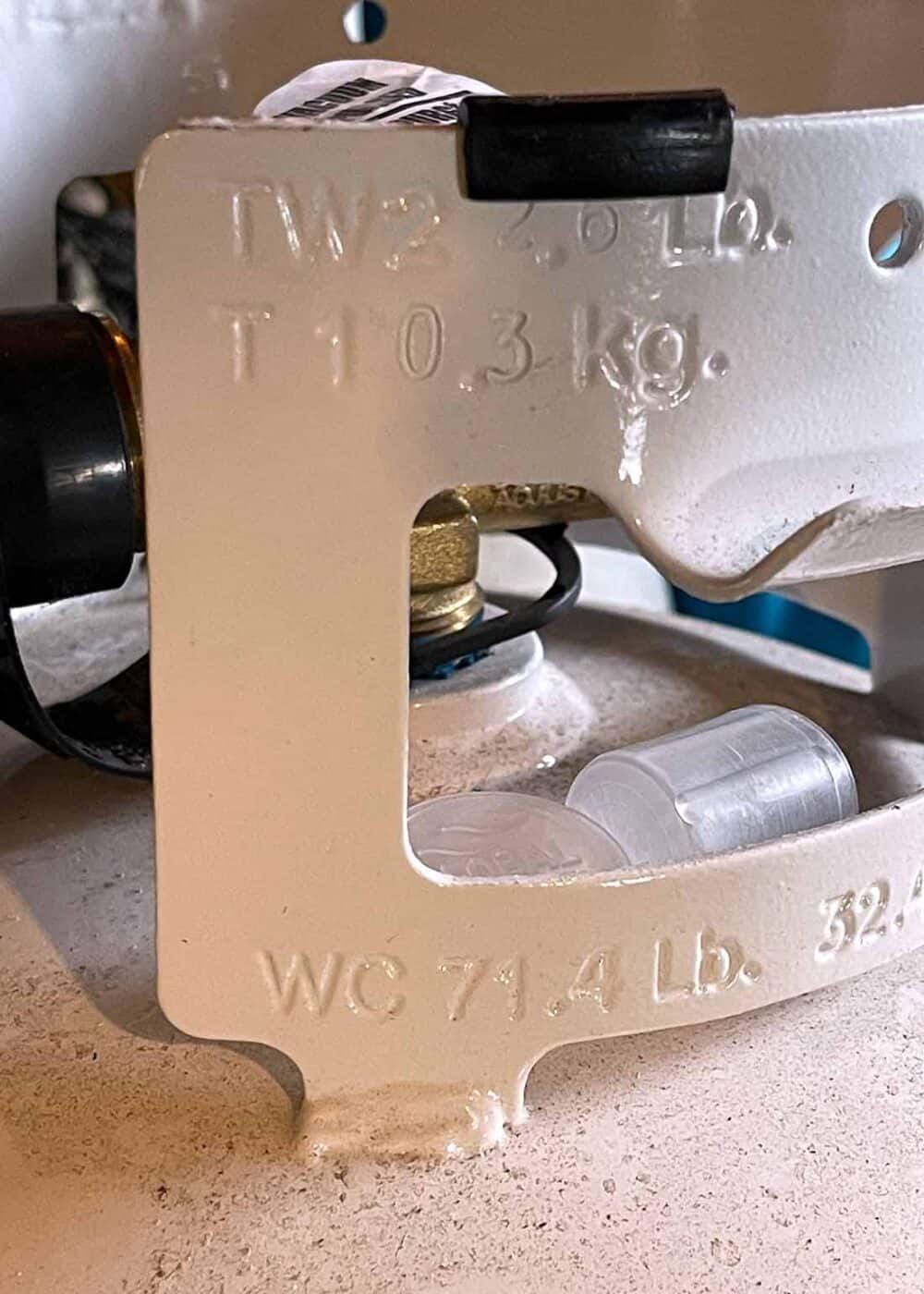
Here’s what the markings on the tank mean.
- WC: Water Capacity. The water capacity of the tank, listed in pounds.
- TW: Tare Weight. The empty weight of the propane tank. Imperial measurement (pounds).
- T: Also, the Tare Weight, listed in metric (kilograms).
Here’s what they look like on my 30 lb propane tank.
How Many Gallons of Propane in a 5 lb Tank?
A full 5 lb tank of propane only contains up to 1.18 gallons of propane.
5lb tanks are quite small. These tanks are commonly used for camping or as a backup fuel source. They are not really large enough to be used as a primary fuel source.
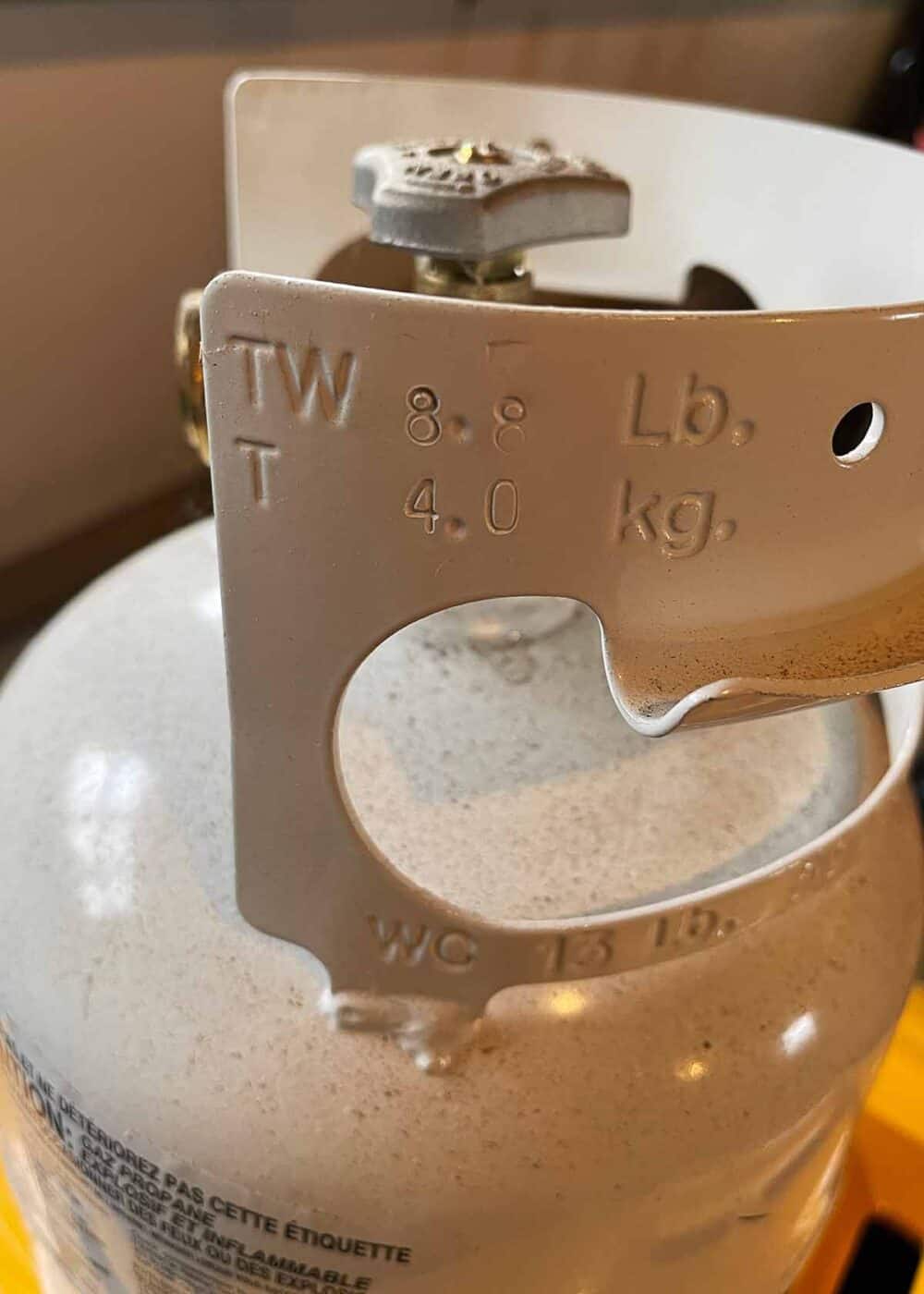
An empty 5 lb tank weighs under 9 lb. And a full tank weighs around 13 lb.
How Many Gallons of Propane in a 20 lb Tank?
A full 20 lb propane tank contains up to 4.7 gallons of propane.
The 20 lb tank is the most common propane tank size for residential use as it is large enough to be a primary fuel source for most applications. They can fuel BBQ, generators, and camp stoves.
An empty 20 lb tank weighs 17 lb. And a full tank weighs around 37 lb.
How Many Gallons of Propane in a 30 lb Tank?
A full 30 lb propane tank contains up to 7 gallons of propane.
The size of a 30 lb tank is a workhorse and is my favorite size. I have two for our generator. They have 50% more capacity than the 20 lb but are still manageable in size.
An empty 30 lb tank weighs 22.7 lb. And a full tank weighs around 53 lb. You can find these tanks at most home and hardware stores.
How Many Gallons of Propane in a 40 lb Tank?
A full 40 lb propane tank contains up to 9.4 gallons of propane.
40 lb tanks are popular choices for commercial applications, like food trucks, commercial generators, and home RV hookups. They are also popular for RVs because they provide enough propane to power the RV’s appliances.
If you’re looking for a tank that will last longer between fill-ups, a 40 lb tank is a good option. The 40lb tank is exactly double capacity over the popular 20 lb tank. If you can handle the weight, it means you’ll have less tanks to manage.
An empty 40 lb tank weighs 29 lb. And a full tank weighs around 72 lb. These larger tanks are not standard for residential use, but they are available if you need a lot of propane capacity.
When choosing a propane tank, it’s important to consider the size of the tank and the propane capacity. The most common residential propane tank sizes are 20, 30, and 40 pounds.
Do you know: Can Propane Freeze?
Keep reading: Are Propane Heaters Safe in a Tent?
Your Turn
And that’s the answer to “How many gallons of propane in a 30 lb tank?” and other common propane tank sizes. The most common residential propane tank sizes are 20, 30, and 40 pounds. When calculating other sizes, remember that the tanks are typically filled to 80% capacity, leaving room for the propane to expand if the temperature increases.
Remember the simple conversion: one gallon of propane weighs 4.24 pounds.
Have a question about tank size and capacity? Please join me in the comment section below.